



Summary at a Glance Starting a therapy practice is now counted as one of the most valued and rewarding professions. With clinical expertise, a solid business plan, financial projections & promotion, one can run & manage a successful therapy practice.Establishing & owning your own therapy practice is a good option for those who love being their own boss. Additionally, they can easily earn a good income, as this profession is highly rewarding and offers a strong profit margin. According to the Healthynewage Report, the global psychotherapy services market is projected to reach $95.8 billion by 2030. Though the profession is soul-satisfying and can provide a good income, it also comes with challenges. You need to set up the system from scratch and manage finances, among other tasks, to establish your roots in the early years. However, that doesn’t mean you change your mindset. By following the guidance outlined here, you can achieve success. Are you ready to learn how to start a therapy practice? Let’s go ahead!
📌 Key Takeaways
- Starting a solo private practice therapy center offers flexibility.
- Choosing the right license & certification is essential for a therapy business.
- You must always have a clear niche & target audience.
- A strong and consistent marketing effort is necessary to build a steady client base.
- Using systems such as billing and invoicing software streamlines processes and saves time.
- Adopting a therapist side hustle allows professionals to start their private practice slowly.
- Selecting the appropriate location is necessary in the therapy profession.
What Is Private Practice Therapy?
Private practice therapy is one of the side jobs for therapists, in which they offer services to patients outside hospitals. It provides significant flexibility and feasibility for therapists, allowing them to work independently & earn more income.
When a mental health professional provides therapy privately, he is solely responsible for managing everything from business setup to marketing.
How to Start a Therapy Practice? Step-by-Step Guide

You need effective strategies to initiate therapy and achieve your desired outcomes. You need to focus on your specialized area, the fund & financial investment management process, and a strong promotional plan. Here is the detailed description of each approach when understanding how to start a therapy private practice:
1. Define Your Niche
It is the first step in your therapy business. You need to define your niche before moving forward. As per your educational background, skills & interests, justify which niche is right for you with a deeper understanding. When you have clarity over the niche, it is highly helpful for your business to stand out in a highly competitive market.
Some areas for a therapy practice:
- Deperssion
- PTSD
- Anxiety
- War Veterans
- Trauma
- Mood disorder
- Relationship
- Eating disorder
Defining your niche before starting a therapy private practice makes it easier to identify your target audience. This also delivers additional benefits, including improved marketing performance and stronger brand recognition.
2. Developing the Business Plan
Outlining the business plan can seem daunting. But it is crucial when you consider how to start a therapy practice. A proper business plan includes your key strategies, vision, financial plan, and many other essential elements. Clearly defines what services you will offer to your patients. Clearly state your business goals so you can work in alignment with them.
In short, your business plan must cover all the crucial strategies that you’ll follow for your business success. It is a complete executive summary of your dream career.
3. Choosing the Location
You definitely need to find office space to run your private practice therapy. Instead of a remote location, look for one that is accessible to your patients. This will directly impact the foot traffic. A good strategy is to choose a location near hospitals that can also drive patient visits.
Ensure the therapy center includes a waiting area and a confidential space for your session (face-to-face or virtual). Additionally, it has sufficient parking for your visitors.
Also, choose the location with the most affordable rent. Taking space on lease in an expensive area can strain your budget. Avoiding high-cost areas is necessary when on a tight budget.
4. Name Your Business
Your business needs a name to identify it in the market when you perform as a private practice therapist. It represents your business to a large audience. While choosing the name, you need to take care of the following things:
- Name should be unique from your competitors
- The chosen name should not be copyrighted or trademarked by other businesses
- Avoid overly personal names
- Easy to remember for your patients
- Reflects the professionalism
- Avoid using too many clinical-sounding names
5. Choosing Business Structure
Choosing the right business structure is an important decision when you think about how to start a therapy private practice. There are various business structures available. Here are the business structures:
- Sole Proprietorship – This business structure is simple and cost-effective. It is ideal if you work independently. Many therapists choose this business structure when performing a solo practice.
- Partnership – A good option when you have one more therapist in your private counseling practice business, and manage things together.
- LLP/LLC – It limits personal liability, which is the popular choice.
- Private Limited Company/Corporation: Most suitable for larger groups. In addition to the business owner, many people are involved in the business.
6. Registering Your Business & Obtaining a License
You will need to register your business for a new practice, depending on your business structure. The registration process varies by region because each state has different laws and regulations. You can also consult your business advisor or CPA.
You also need to obtain an Employer Identification Number (EIN) from the IRS if you own & offer therapy privately. It will be helpful during your business bank account opening & taxation. Also, ensure your private practice complies with HIPAA standards.
Another crucial legal consideration is obtaining a license. A licensed psychologist with a National Provider Identifier Number (NPI) can easily apply for a business license. You must hold a valid state license, such as LCSW, LPC, LMFT, or Psychologist.
7. Opt for Insurance
When starting private practice, always choose the right insurance. Selecting the appropriate insurance is essential to protect your business from accidental losses. Here are some insurance options for you:
- Professional Liability (malpractice) – It covers negligence claims.
- General Liability – It covers accidents that occur on your premises.
- Property Insurance – Protecting you in case of any property damage due to fire or theft.
- Business owner’s policy (BOP) – This insurance covers liability and property.
- Cyber Liability – A good option for handling sensitive client information and protecting against data breaches.
- Workers’ Compensation – If you have a team, this option is better because it covers your employees’ work-related injuries.
8. Prepare Financial Management
As no business begins with zero investment, a therapy occupation also comes under this category. Depending on your niche, location, and other factors, you need to develop an investment plan. Therefore, you need to look for some financial sources for starting a therapy practice:
Savings
If you have a substantial savings balance, prioritize investing it. The major benefit is that it imposes no repayment or interest obligations.
Opting Business Loan
Several banks and lenders offer business loans for startups. SBA loans, such as SBA 7(a) and SBA 504, are popular options that offer low interest rates. Most private practitioners choose these business loans.
Business Credit Cards
You can easily utilize them for short-term investments. Purchasing softwares and marketing expenditures fall under this category. However, the interest rate is high.
Private Investors and Angel Investors
You can also connect with investors who may fund your business. However, in return, they take over your equity. This strategy is useful for clinics with strong growth potential.
9. Purchasing Equipment
Don’t forget to include this point when planning how to start a therapy practice. You’ll need specific equipment for your therapy clinic, depending on your niche. Some of the common tools you need are as follows:
- Therapy mats
- Therapy chairs
- Positioning aids
- Ultrasound or electrotherapy devices
- Exercise balls
- Resistance bands
- Mobility aids
In addition to clinical equipment, you need software to streamline your workflow. For instance, if offering online therapy, you need a stable internet connection, a monitor, and other equipment. Similarly, for administrative tasks, you can purchase an appointment scheduling system, a practice management software, or billing software such as Moon Invoice.
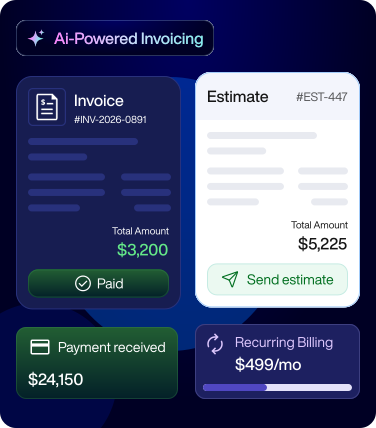
Trusted by 1.7 million global customers, AI-powered invoicing software lets you streamline your billing. It offers more than 66 free, customizable therapy invoice templates to streamline your invoicing. Commits 100% accuracy on every invoice you create while saving your time. One can easily keep & manage the entire business finances separate from personal assets.
Ready to Take Your Therapy Billing to the Next Level?
Try Moon Invoice and streamline billing from invoice creation to final payment.
10. Hiring the Team
It works fine for you when you need to manage everything at the initial stage. However, as your business grows, you will need more people to streamline your workflow. You may not need additional therapists, but hiring an administrative assistant can still be beneficial.
It’s because you’re freed from managing appointments and billing, allowing you to focus on other core tasks of your private therapy practice. As your business grows, you need more people. So include a hiring plan in your private practice therapy strategy.
11. Marketing Strategy
This is the bottom line in the guide on how to start a private practice. Once your business is set up, you can start marketing, but not without a solid marketing strategy. The marketing plan should cover online promotion activities, including Search Engine Optimization (SEO), social media presence/marketing, and local business listings.
Business marketing requires a slightly higher investment. Make sure you have a good return and plan the investment accordingly.
12. Join Relevant Community and Network
Dependence on marketing alone is not enough when you are starting a therapy practice. You need to think beyond that. The best approach is to join the community and network within it. This will keep you aligned with the latest trends. Also, attend events in your profession to build a network that ultimately lets you win the right lead.
How Much Does It Cost to Start a Private Therapy Practice?
The cost to start the private therapy practice depends on several factors, including the niche, location & current market conditions.
The estimated total cost of different types of practices is as follows:
- Solo private outpatient practice – $16,000 to $70,000
- Small multi-clinician outpatient clinic – $70,000 to $250,000
- Mobile OT practice/ Home-based – $6,000 to $26,000
The core investment categories are as follows:
- Office lease & build-out – $2,000 to $120,000+
- Legal & business setup – $500 to $5,000
- Licensing, certification, and professional liability insurance – $1,000 to $6,000
- For setting up an administrative system – $500 to $10,000 annually
- Office furniture and other clinical equipment – $2,000 to $30,000
What Are the Common Mistakes to Avoid in Private Therapy Practice?
Many therapists make common mistakes when working as full-time employees or running a side business. Some of them are as follows:
- Starting the practice without a proper niche
- Neglecting the legal and regulatory requirements
- Not leveraging the power of social media
- Not attending the events when running a private therapy practice
- Charging too high rates or too low rates
- Working on weekends could exhaust professionals
- Dealing with the client without understanding the problem
- Not monitoring the finances & performance
Take Complete Financial Control of Your Business
Digitalize your capital management with Moon Invoice to ensure accuracy and clarity.
Final Statements
Starting a therapy practice is a good option if you have strong therapeutic skills, enjoy working independently & maximize earnings. Also, achieving your desired success does not come overnight. It requires sustained effort, sound investments, and, of course, patience. Always move through the journey step by step, covering the proper business plan.
We conclude our guide on how to start a therapy practice and hope you gain the knowledge you need to satisfy your curiosity.
FAQs
What are the 5 C’s of Therapy?
What type of therapist makes the most money?
Do you need a lawyer to start a private practice?


Jayanti Katariya is the founder & CEO of Moon Invoice, with over a decade of experience in developing SaaS products and the fintech industry. He holds a degree in engineering. Since 2011, Jayanti's expertise has helped thousands of businesses, from small startups to large enterprises, streamline invoicing, estimation, and accounting operations. His vision is to deliver top-tier financial solutions globally, ensuring efficient financial management for all business owners.